Wednesday, December 21, 2016

Singapore wrap

We only had 3 full days in Singapore, which is a ridiculously short time to get to know any City, but here are our quick take-aways:

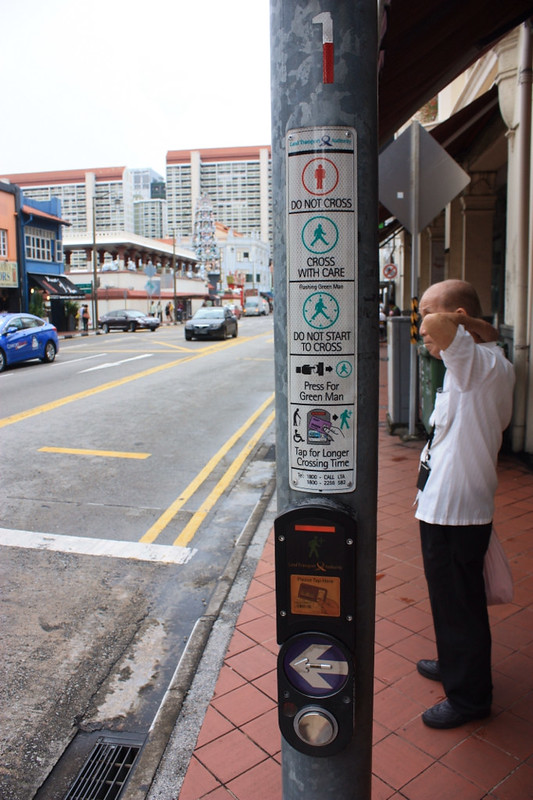
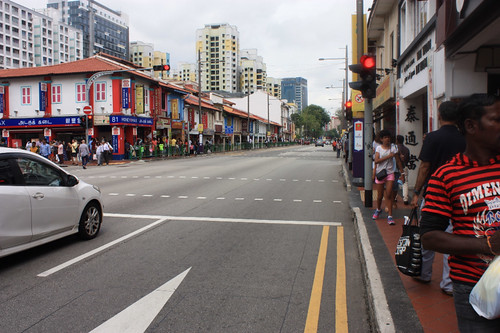
The City was ridiculously easy to visit. The transit system makes it easy and cheap to get around, the streets are safe (just don't try to cross them against a light) and everything is comfortable. Singapore has a bit of a "law and order" reputation, but it is hard to tell if the apparent orderliness is a result of the hefty fines posted for every crime from jaywalking to carrying a durian onto the MTS, or it is just a cultural attitude that grew from making a City of so much diversity livable. During three days out and about, I only remember seeing a police officer once, and that was a small group of young cops riding the train one day.

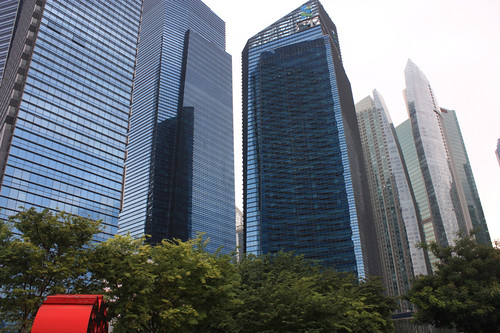
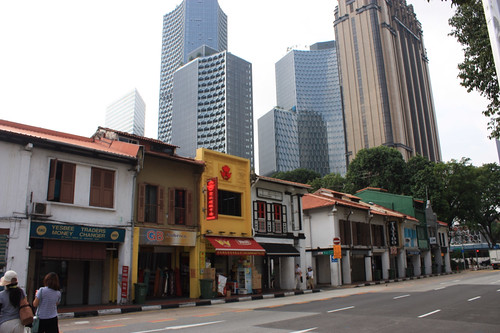
It is clear Singapore is all business, and the business of Singapore is business. The glass towers of the CBD (Merryl Lynch, CitiBank, all the usual characters) were quiet on the Saturday we wandered through first, giving us the sense it was a dead downtown? Re-visiting around lunch time on Monday, it was hustling and bustling with people in corporate wear, and the sushi bars and CrossFit centers that prey open them.
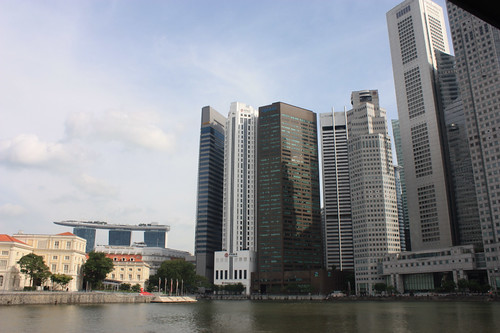
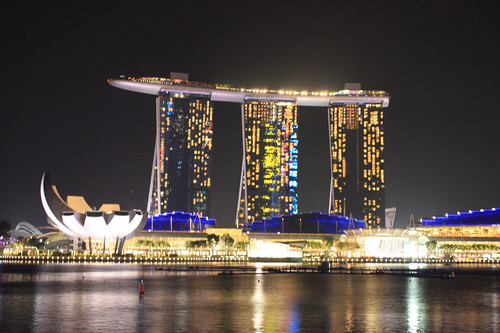
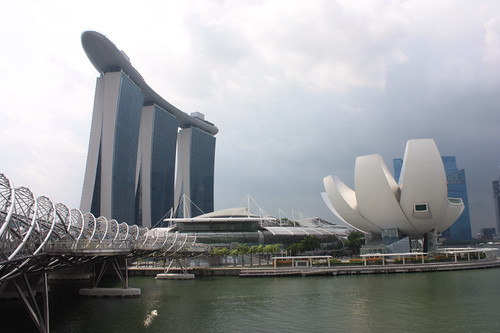
However, it is clear the other real business of Singapore is shopping. It was hard to escape the feeling the entire City is a series of air-conditioned Malls. From the dazzling and gigantic Marina Bay development (under that cricket-wicket-boat-in-the-sky hotel) to the sprawling metropolis of Orchard Park Road, which only serves to connect malls. We are traveling light, so shopping wasn't our goal, but if you need a Gucci bag or new Swiss wristwatch, I know a place...

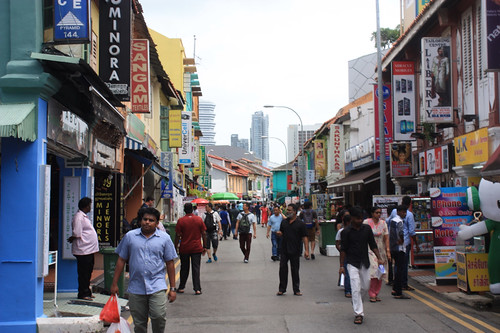
Fortunately, they have not completely replaced the older markets, like Tikka Place in little India where we tended to have our breakfast or random meal from one of the Hawker stalls. It was everything you expect from a public market in the tropics: piles of fresh fruits and vegetables, some very unfamiliar, and fresh seafood of every shape, size and species.

Which brings us to the topic we were most looking forward to about Singapore: the food. The Hawker food and noodles are what makes Singapore famous, and we were only a little disappointed. We had good biryani, decent Indian food, some nice Thai dishes, watched our breakfast parati get hand-made by the hardest working man in Tikka, and generally grazed at Hawker stalls for cold drinks and snacks.

But this is not the street food of Thailand or Vietnam. In a City of rules, the Hawkers are concentrated in markets or designated and dedicated hawker areas, with fixed stands and pretty repetitive menues, more like the food truck areas of Portland. The food was plentiful, fairly cheap, and there was indeed food from around Asia, prepared by people from all over Asia, but I am hard-pressed to think of a single meal that stood out like the Tom Yum in Chiang Mai, papaya salad on Ko Samui or the Bun Bo in Hue.
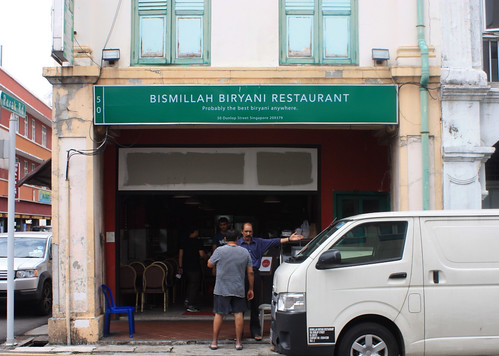
We did find a couple of decent beers, but paid $17 for pints, and a lot of not-so-good beer sells for $12 a pint, so we took the $17 option the few times it was presented to us.
In many ways, Singapore was more like a diverse and exotic big American City than it is like Kuala Lumpur or Shanghai. It has none of the murky disorder of a Bangkok, or the endless concrete canyon feel of New York. the powpulation diversity is such that you might think you were in Downtown Vancouver, except for the heat, and everyone was so polite (in 3 days, I don't think I heard one person honk a car horn). The neighborhoods were walkable and distinct, and the hills small and insignificant.
So, basically, Toronto.
Edit: Tig actually drew a better comparison. It is a dynamic City on a river, with hawker food areas, lots of great public space, progressive transportation, but still living the American Dream, if in a quirky way. Maybe it is more of a Portland.


Tuesday, December 20, 2016

Singapore day 3

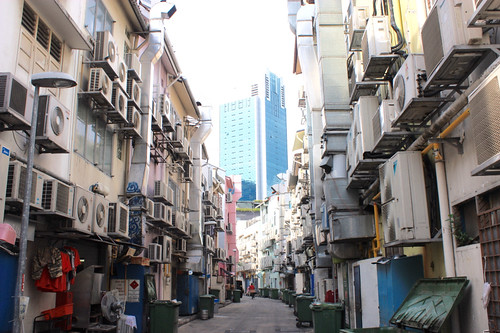
We decided to get a little extra sleep on day 3, as it was ending up with us catching a midnight flight to Sri Lanka. We also thought it might be a good after three days of mostly being outdoors in the equatorial heat, we might want to spend some time on the other side of these:

Not being shoppers, we went off to the museums instead of the malls. Specifically, the Asian Civilizations Museum, and the Singapore City Gallery.

I did not take any pictures in the former, as it just wasn't that kind of place. It was the kind of place where spectacular artifacts from 3,000 years of (mostly southeast) Asian cultures are on display, along with many items related to the variety of civilizations that have relied on trade through the Straits of Malacca. Paintings, textiles, furniture, gold, silver, jade, ivory, and a dizzying array of ceramics. Highlights may be the entire recovered cargo of a 3rd century ship found on the bottom of the Straits, encrusted in coral.

The Singapore City Gallery is not a gallery of traditional arts, but of the darkest, most mysterious art of all: City Planning! A City growing as rapidly as Singapore, in a country as rigidly managed by government as Singapore, needs a strong City Plan and vision to be successful. People who know me (why would anyone else be reading this?) know I can geek out on a good City Plan.

Housed on the bottom couple of floors of the Urban Development Agency, which appears to be a combination of the City's Planning and Economic Development departments with a bit of an entrepreneurial edge, here is where all of the plans large and small for the development of a City of 17 Million are on display.
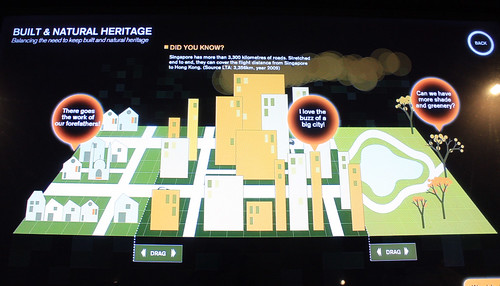
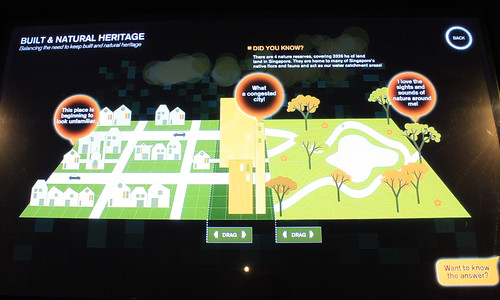
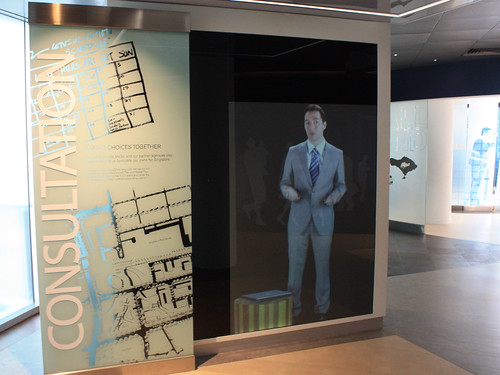
It was also a well presented display on how the City got to be the way it is, a bit of promotion for the successes of the City (transportation, water supply, garbage collection, etc.), and a bit of an explanation of the planning process. I loved some of the interactive displays such as this one, where you could drag the sliders to divide the city up into different proportions of low-density housing, high-density development, and preserved green spaces, then watch what complaint bubbles pop up with every choice:
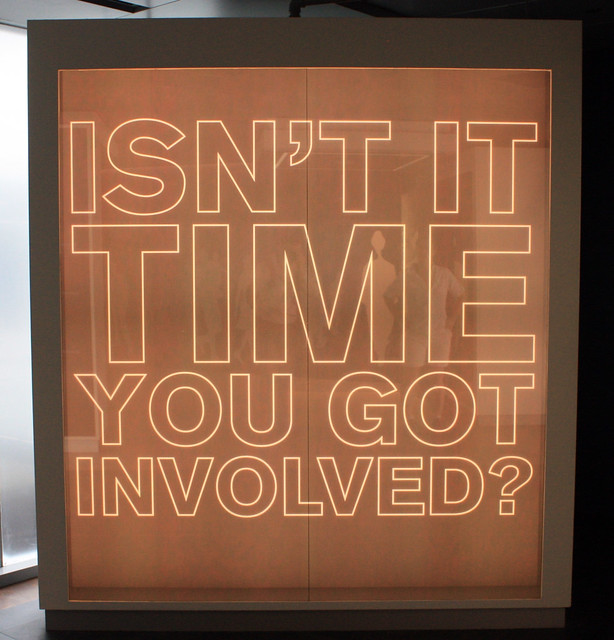
There was an obvious theme to the Gallery that came across pretty clearly:
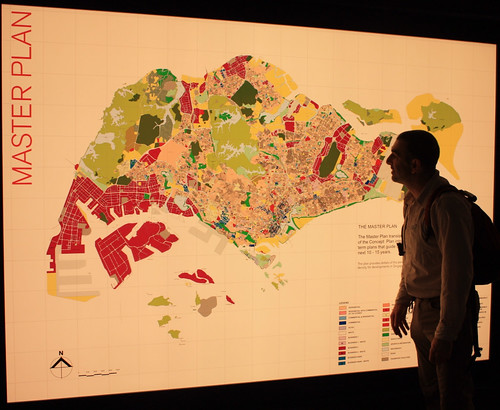
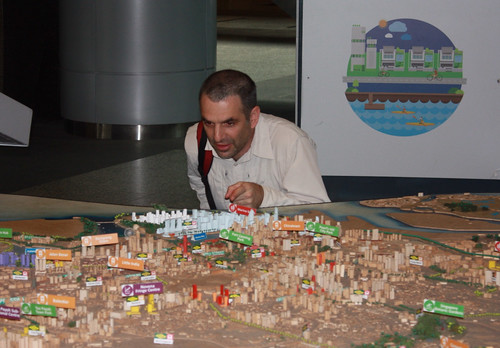
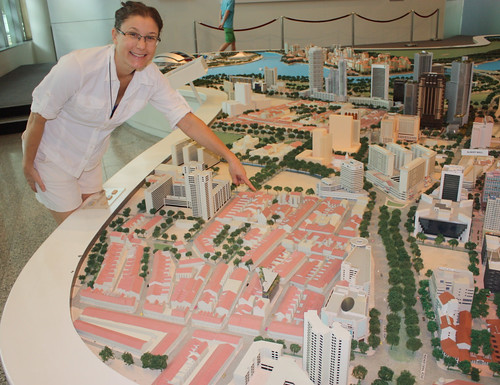
If I was geeking out before, I went into geek overdrive with the 1:5000 wood model of the entire island, here I lord over the Central Business District:
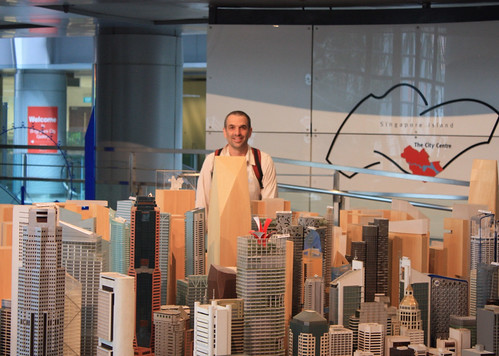
...until I went upstairs and saw the entire "City Centre" was rendered in highly detailed 1:400 scale! To get a sense of the City Plans, the bare wood buildings in the model in front of me are the ones not yet build, but already planned:
And here is Tig pointing out where our hotel in Little India is rendered:
What a geek.
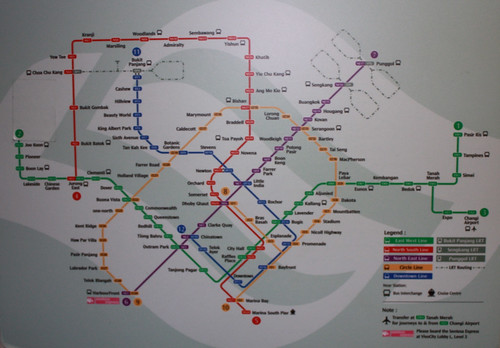
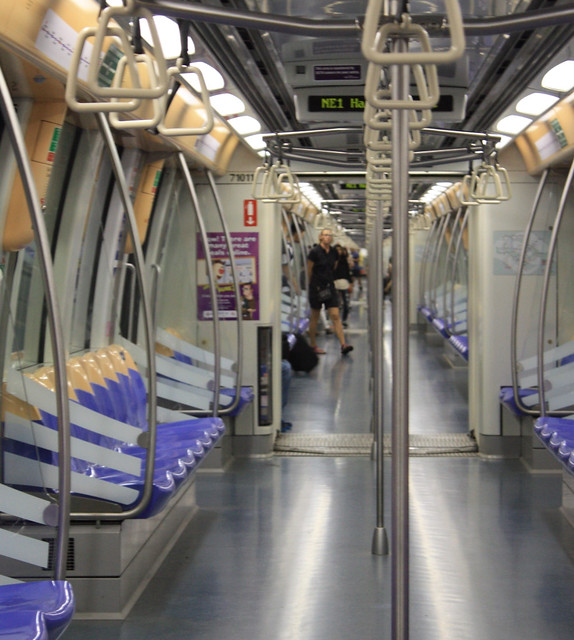
Getting around has been really easy, as we have been relying on the MTS, a network of 5 medium-weight driverless electric trains that cover the island pretty extensively.
The trains are connected by spacious multi-level underground stations in the City Centre, and fares (through a Compass-card and fare-gate type system) are generally between $1 and $3 per ride. The entire system was super efficient with frequent trains and really easy to navigate system maps and stations. The trains were occasionally crowded, which is something to say considering the trains were wide and some were so long, it was difficult to see the far end on a mostly-empty train.
There are also three smaller LRT loops in outer districts, and construction of line expansions and an entire new line are ongoing. Enough investment in public transit to make any City Councillor geek out.


Monday, December 19, 2016

Singapore day 2b

2b because sketchy software or wifi made me lose the first, much more elegant and insightful version of this post...

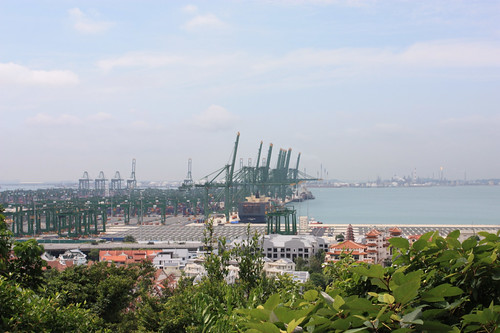
Still not time-zone optimized, we woke early on our second day and after grabbing a Hawker breakfast, we hopped on the MTS and rode out to the Southern Ridges parks. These are a series of low forested ridges just north of the mother of all container ports built on reclaimed land west of the main City Centre.

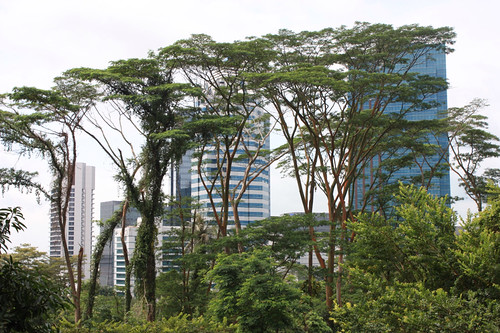
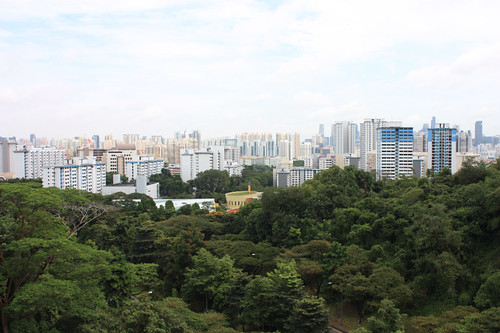
The ridges are connected by surface trails, minor roads, and elevated walkways up in the jungle canopy. We managed to stretch a 4.5km walk to probably twice that length, moving along the ridges through thick jungle and the cacophony of jungle critter noises, all the time catching views of massive residential developments, close and far, beside, above and below us.
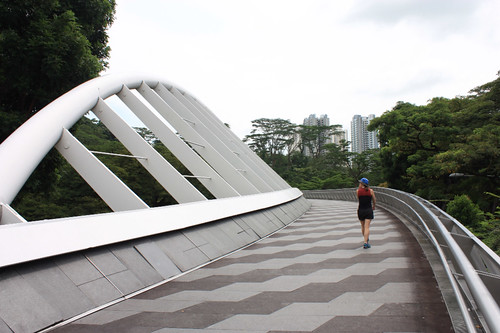
On the way to the high point, 105m Mount Faber, we crossed a couple of interesting pedestrian bridges spanning deep cuts in the ridge lines with ubiquitous race-track multi-lane freeways. The Alexandra Arch was pretty:
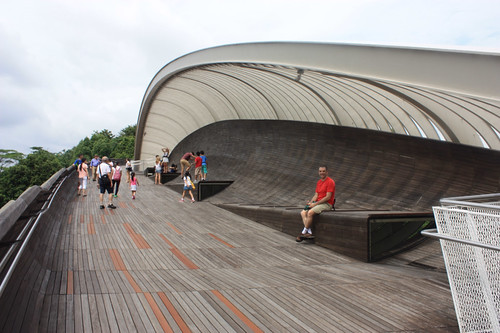
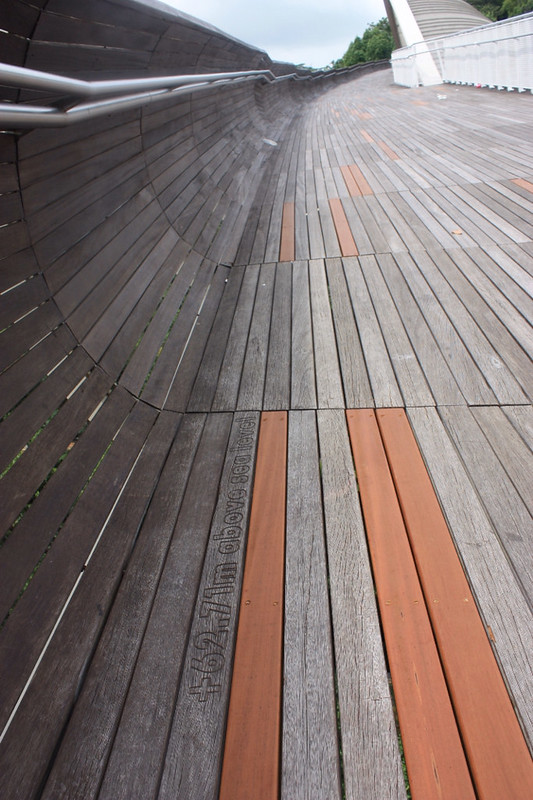
...but held nothing to a bridge called Henderson Waves, which is simply one of the nicest public spaces I have ever visited. It is a swoopy, curvy bridge, clad in some sort of exotic weather-defying hardwood, built to change grades through subtle slope shifts that are almost imperceptible while walking along, but create a "wavy" surface expression. Along the couple-of-hundred meter span, there are a couple of enveloping sitting areas with views of the southern islands and central business district below.
The result is comfortable, a little whimsical, and inviting. Absolutely perfect execution of a public space, where a boring overpass would have sufficed. A real highlight.
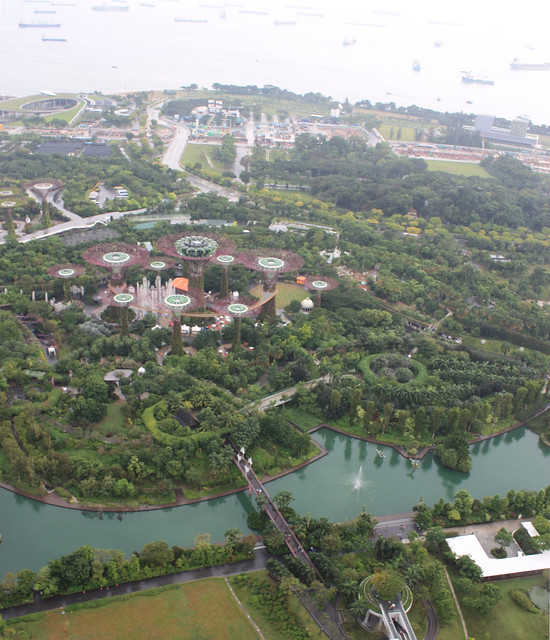
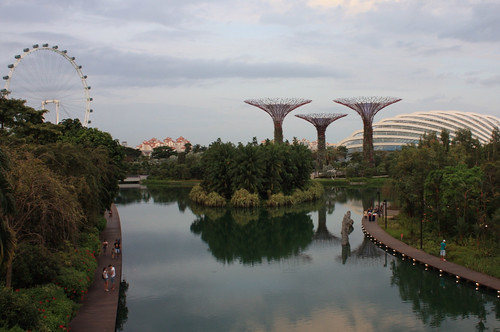
We also visited another remarkable public space. At the Marina district, far below the boat-on-a-cricket-wicket hotel tower we visited yesterday, is a large public garden and green space, the Gardens by the Bay:
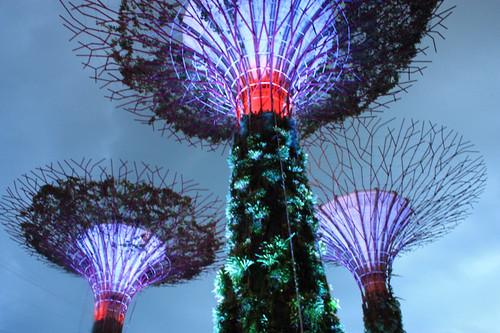
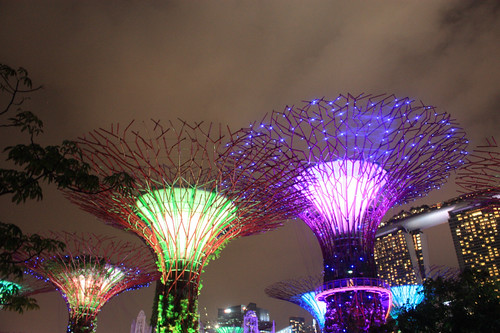
Here there are to conservatory domes (flower dome and cloud forest dome) and a dozen or so large themed outdoor garden exploring different aspects of ecology and horticulture. However the are is probably more noted for several groves of what they call Supertrees. These large mushroom-shaped steel and glass latticework towers were being encroached by climbing plants, blurring the line where organic ends and mechanical begins. They are part of the mechanical heating/cooling system for the conservatory domes, and at night they are lit up in various ways to create a unique light show.


Unfortunately, the day we were there, the grove was dominated by some sort of "Christmas wonderland" attraction with its own much more garish lighting, and the light show was synced to Mariah Carey Christmas songs. Bah humbug.
Overall, we were impressed by the quality and quantity of public spaces in Singapore. Aside from the malls (ugh), it seemed you were never far from a nice public space, some large, some small, but all very open and inviting. There is a ton of public are, again some very small and subtle, others space-dominating. Clearly, this is a City that values and invests in public spaces.
Q
The only thing we never really focused out was the timing of Singapore. IT seemed the place was empty at noon (Englishmen and Mad Dogs?), it was hard to find an open restaurant before 6, but at midnight the streets were packed.


Saturday, December 17, 2016

Singapore day 1

We are back on the road. For the last two years, things have been a little crazy, and we have only managed to sneak away for short beach vacations at Christmas, and no-one wants to read endless posts about our sitting in warm sand and taking occasional Caribbean soaks. Time for some adventure.

We start this trip pretty much where we left off last trip: in a big, rapidly growing SE Asian City of Lights. We are spending a three-day cultural and circadian rhythm adjusting stopover in Singapore, before popping over to our eventual destination in Sri Lanka. My first impression is much like that of Shanghai when we visited there in 2014: This is the kind of big, prosperous, and happening city that reminds you that Vancouver is a very pretty backwater.

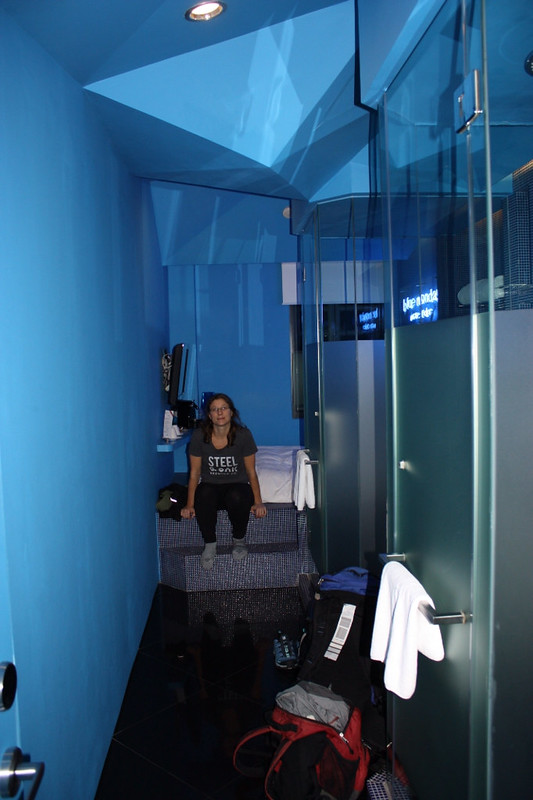
First things first. We are staying in a funky little boutique hotel in the Little India neighbourhood. Funky and little also describes our room, which is about 8 feet wide, and saves a lot of unnecessary wall space by putting the bathroom and the bed all in the same room. The view out the window is of an alley two floors below that operates as some sort of ad- hoc restaurant overflow seating until well past midnight. This is in no way surprising, as In Little India, pretty much any open space seems to serve as some sort of ad-hoc restaurant seating.

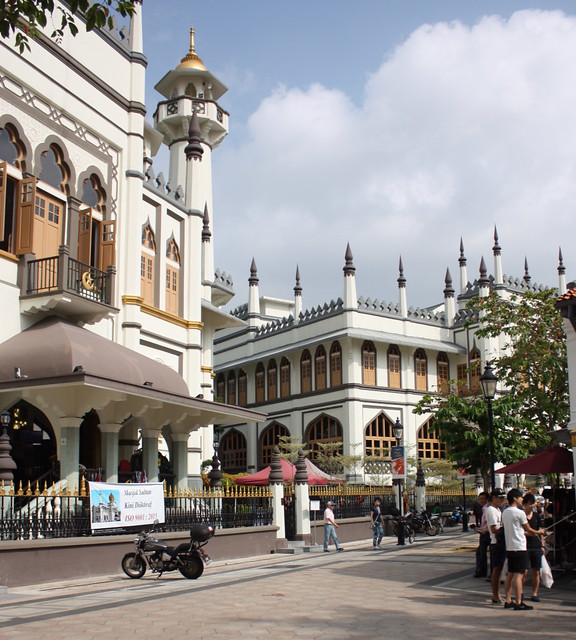
On our first day, we walked at least 20 km, just to get the feel of the place. From Little India, through an Arab neighbourhood, to the marina, the central business district, Chinatown, and through the Colonial area back to home. It was hot, humid, and we managed to be inside while it rained.

As you can tell from the sentence above, Singapore is an incredibly diverse city, with people from around the world here to engage in the business of Singapore, which is business. A bustling commerce and trade City, the glass canyons of the CBD tower over colonial architecture.

We are here on the weekend, so the business traffic is limited, but the streets were quiet for another reason: Singapore appears ot back night time City. There are more people on the streets at midnight than at noon, and way more people in the mall than on the street. But more on that later.

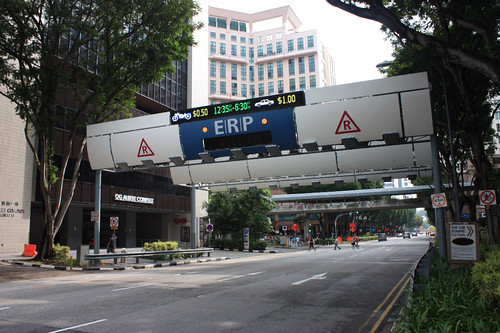
Our first impressions are that Singapore is almost a great City for walking, but it is a great City for driving. It has long been touted by transportation planners as a City that does things right. An extensive and affordable subway system, a comprehensive bus network including dedicated bus lanes, one of the world's first regional road pricing systems and high licensing costs for private automobiles: Singapore checks all the Transportation Demand Management boxes that should make it a traffic-paradise.

It is also, quite clearly, a booming economy. construction is everywhere, as are indications of wealth. A few more Cartier stores than a population might be expected to support, a healthy proportion of European sports cars on the street, and a bustling energy in restaurants where you can pay the equivalent of C$70 for a steak.

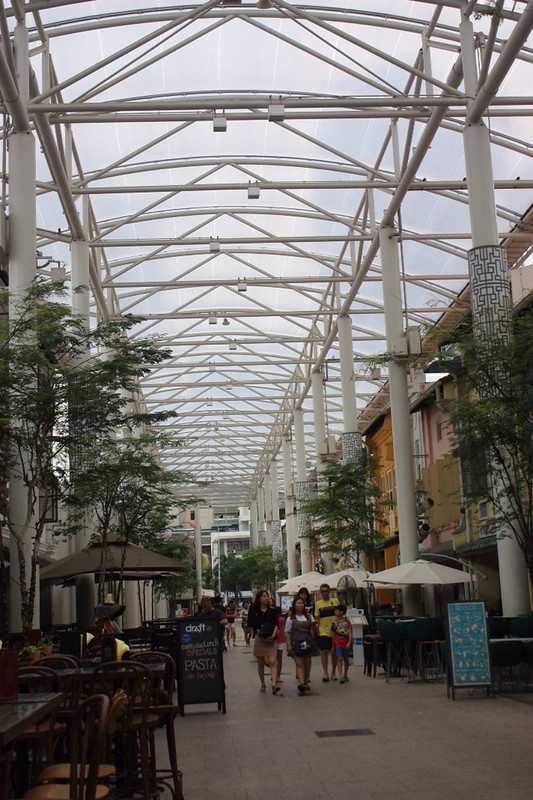
Back to walking; There are phenomenal public spaces of all sizes, from covered and open car-free shopping promenades and "hawker" food courts to ample green spaces and riverfront walkways, however, getting from A to B on foot is sometimes surprisingly difficult, as walkways dead-end at the back of buildings and the aforementioned construction blocks your preferred route. And the roads are sometimes remarkably hostile.

Apparently when people pay congestion charges to enter the City, they expect value for that money, and they get it. Four-lane-wide one-way streets are virtual raceways through places that should otherwise be pedestrian friendly. When you need to build metal fences to separate pedestrians and speeding cars in a retail area, something has gone wrong.
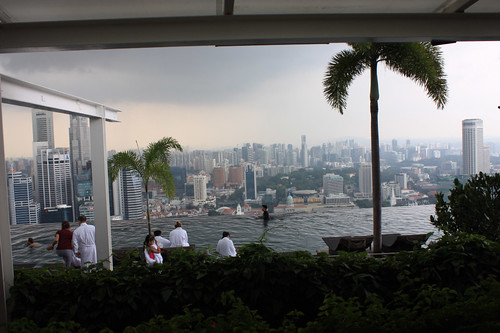
The highlight of Day 1 was taking the elevator to the top of the Marina Bay Sands, where we sipped slightly too expensive cocktails next to the infinity pool 57 stories above the bay, as the sky opened up into a remarkably intense 30-minute thunder storm.